
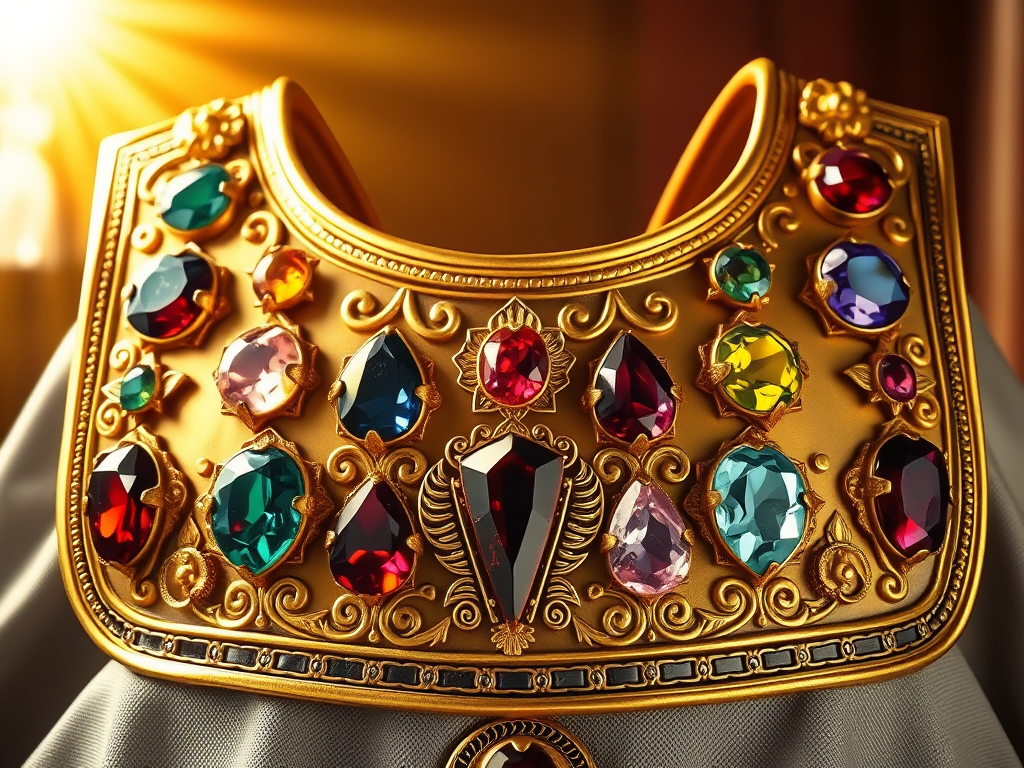
Crystals and gemstones have held a profound place in human culture for millennia, revered not only for their beauty but also for their symbolic and spiritual significance. In the Bible, these stones serve as more than mere adornments—they are expressions of God’s glory, tools of spiritual communication, and reminders of divine order. When viewed through the lens of modern research, we can also explore how crystals have been understood in scientific and wellness contexts, connecting ancient symbolism with contemporary curiosity.
The Priestly Breastplate: A Covenant of Stones
In Exodus 28:17–20, God commands the creation of a breastplate for the High Priest, Aaron, adorned with twelve stones, each representing one of the twelve tribes of Israel: sardius, topaz, carbuncle, emerald, sapphire, diamond, ligure, agate, amethyst, beryl, onyx, and jasper. These stones were arranged in four rows, symbolizing the unity and diversity of Israel.
The breastplate was not just ornamental—it bore the names of the tribes before the Lord, signifying intercession, representation, and divine guidance. The gold filigree settings highlighted the sacredness and value of the priestly office. Each stone, carefully chosen and positioned, embodied the stability, beauty, and uniqueness of God’s people, offering a tangible reflection of spiritual truth.
The Urim and Thummim: Divine Guidance Through Crystals
Within the breastplate were the Urim and Thummim (Exodus 28:30), often thought to be two stones or crystals used to discern God’s will. Their names, translated as “lights” and “perfections,” suggest a role in illuminating divine decisions. Some scholars propose that these objects were used with the breastplate stones to receive guidance for specific questions posed to God.
This concept highlights the idea that sacred objects—even crystals—were considered conduits for divine revelation, illustrating a relationship between the material world and spiritual insight.
Revelation’s Celestial Jewels: The New Jerusalem’s Foundation
In Revelation 21:18–21, the New Jerusalem is described with twelve foundational stones, including jasper, sapphire, chalcedony, emerald, sardonyx, sardius, chrysolite, beryl, topaz, chrysoprase, jacinth, and amethyst. The city’s walls of jasper and streets of gold reflect purity, holiness, and the multifaceted nature of divine glory.
Just as the High Priest bore the names of the tribes on his breastplate, the New Jerusalem carries symbolic significance through these radiant stones, connecting earthly and heavenly visions of spiritual order and divine presence.
Symbolism and Spiritual Significance
Across scripture, gemstones carry recurring themes:
- Beauty and Perfection: Their brilliance mirrors the majesty and creativity of God.
- Foundation and Stability: Stones symbolize strength, reliability, and God’s unshakable promises.
- Diversity and Unity: The variety of stones reflects the unique contributions of individuals within the collective body of believers.
- Divine Revelation: Crystals and gemstones may act as focal points for meditation or reflection, representing a tangible connection to the divine.
While the Bible does not explicitly describe healing properties of crystals, their use in sacred contexts underscores their symbolic importance as expressions of faith, guidance, and spiritual focus.
Modern Perspectives: Science and Crystal Energy
In recent decades, crystals have been explored for their potential energetic properties, though scientific findings remain cautious. Studies, such as those by Christopher French et al. (2001), found that the effects people report when using crystals often align with the placebo effect, meaning that belief and intention play key roles in perceived outcomes. Some proponents reference the piezoelectric effect, where quartz crystals can generate small electrical charges under pressure, as a potential explanation for their influence, though empirical evidence connecting this to spiritual or physical healing is limited.
Other research in complementary medicine acknowledges that crystals may serve as psychological or meditative tools, helping individuals focus, set intentions, and cultivate mindfulness. While not replacements for medical care, crystals can support reflective and contemplative practices, echoing their biblical role as objects of focus and connection.
Integrating Scripture and Modern Practice
When combining biblical symbolism with modern perspectives, crystals offer a multidimensional experience:
- Reflecting God’s Glory: As in scripture, the visual beauty of crystals can inspire awe and spiritual contemplation.
- Supporting Intention: Modern studies suggest that mindfulness and focused intention can enhance personal reflection, a practice not unlike the symbolic use of stones in the priestly breastplate.
- Meditation and Spiritual Focus: Using crystals as tools for meditation echoes their biblical association with divine presence and intercession, allowing individuals to cultivate inner clarity and spiritual awareness.
By acknowledging both the symbolic significance in scripture and the psychological or energetic potential studied in modern research, believers can approach crystals thoughtfully, integrating them into reflective spiritual practices without conflating them with medical treatment.
Conclusion
Crystals and gemstones in the Bible represent divine beauty, spiritual insight, and covenantal connection. From the High Priest’s breastplate to the foundations of the New Jerusalem, these stones convey stability, unity, and sacred purpose. Modern research on crystal energy, while still exploratory, suggests that their symbolic and meditative value can complement spiritual practices, reinforcing reflection, mindfulness, and intention.
Crystals serve as a bridge between creation, symbolism, and contemporary practice—a reminder that the material world can reflect divine principles and support human connection to the sacred.
 Priestess of Shau
Leave a comment