
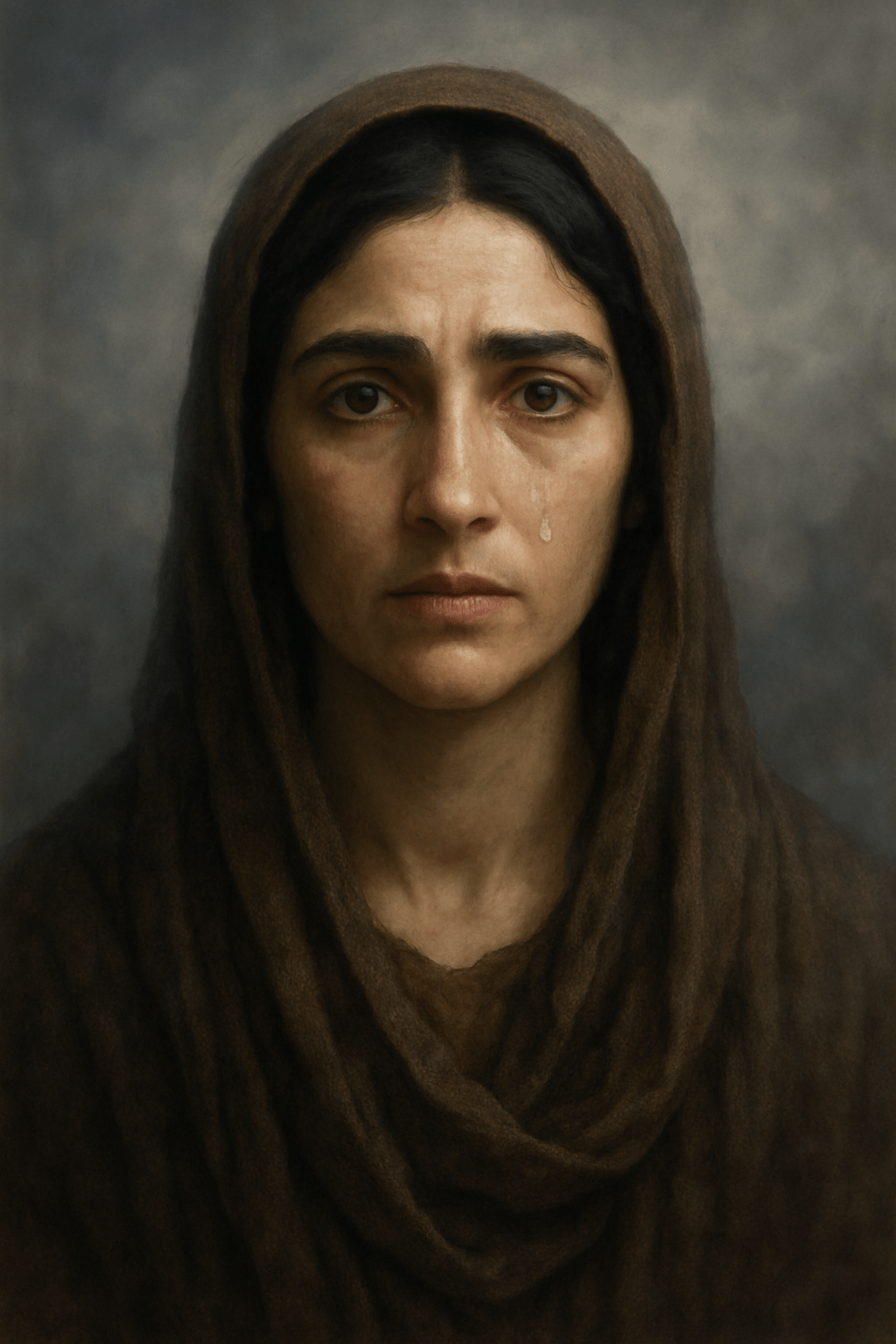
How do you expect someone to react when they find out that their entire upbringing, their Sunday school lessons, and the sermons of every pastor they’ve ever known have all told them that Mary Magdalene was a prostitute?
It’s not just a small theological error. It’s a deliberate erasure. It’s spiritual gaslighting.
Because when you dig into the history, when you really start pulling at the threads of what’s been passed off as “truth” for centuries, you find something deeply unsettling: Mary Magdalene was never a prostitute. She was never the fallen woman the Church made her out to be. She was something far more powerful—a leader.
And that scared people.
The Origins of the Lie
Mary Magdalene appears in all four Gospels. She is not anonymous. She is not hidden. She is clearly named as a devoted follower of Jesus, present at the crucifixion when many male disciples had fled, and she is explicitly named as the first person to witness the resurrection and share the news.
Luke 8:1–3 tells us that she was healed by Jesus and that she then supported his ministry financially—a major indicator of independence, wealth, and influence. That alone challenges the patriarchal norms of both ancient Israel and the early Church.
But in 591 AD, Pope Gregory I delivered a sermon that changed everything. He took three distinct women in Scripture—Mary of Bethany (the sister of Martha and Lazarus), the unnamed “sinful woman” who anoints Jesus’ feet in Luke 7, and Mary Magdalene—and collapsed them into one identity. He labeled her a prostitute. A woman redeemed, yes—but only after being defined by sin.
This wasn’t an accident. It was theological revisionism, born of a Church hierarchy that was consolidating power and pushing women out of leadership roles. And let’s be honest—it’s much easier to praise a reformed harlot than to reckon with a powerful female apostle.
The Vatican didn’t correct this false narrative until 1969. But by then, the damage had been done. Western Christianity had passed down this lie for over a thousand years.
The Adulterous Woman and Jesus Writing in the Sand
Then there’s the story every modern Christian knows: the woman caught in adultery (John 8:1–11). Angry men drag her before Jesus, asking whether she should be stoned. Jesus draws in the sand and says, “Let he who is without sin cast the first stone.”
It’s poetic. It’s deeply human. And according to the earliest manuscripts of the Gospel of John—it wasn’t originally there.
Most modern Bibles, including the ESV and NRSV, now include a footnote acknowledging this. Scholars agree that the story was added centuries later, probably to make a theological point about mercy and judgment. And while it’s a powerful illustration of Jesus’ character, it’s yet another example of how stories were manipulated, inserted, and rearranged.
So why do pastors still preach it like it’s historical truth?
Because questioning the text is dangerous. It unravels things. It requires humility, scholarship, and a willingness to let go of inherited myths.
The King James Version: A Translation with an Agenda
Now, let’s talk about the King James Bible, because this version plays a major role in keeping these narratives alive.
Commissioned in 1604 by King James I of England and completed in 1611, the KJV was a politically driven translation meant to unify England under one sanctioned version of Scripture. But it’s full of translation errors, archaic language, and editorial bias. Greek and Hebrew words were often mistranslated or flattened to serve theological and cultural goals of the time.
For example, the Greek word “diakonos” (used to describe both male and female ministers) is translated as “minister” for men, but “servant” for women. The Greek word “apostolos” is applied to Junia—a female apostle in Romans 16:7—but for centuries, translators changed her name to “Junias,” a fabricated male version, because they couldn’t handle the idea of a female apostle.
And yet many pastors still insist that the King James Version is the only legitimate Bible, despite its historical and linguistic flaws. They’ll teach you about Mary Magdalene using this version. They’ll preach about “the woman taken in adultery” as if it’s canon. They’ll double down on stories that never belonged to Scripture in the first place.
Why?
Because challenging those teachings would also mean challenging the systems that benefit from them.
The Consequences of the Lie
Reducing Mary Magdalene to a repentant prostitute didn’t just rewrite her story—it erased a legacy.
Imagine what the Church could have looked like if we’d held her up as the first evangelist, the first witness, the courageous disciple who stayed when others ran. Imagine how Christian women could have seen themselves reflected in leadership, in preaching, in evangelism—not as helpers or supporters or silent worshippers, but as full participants in the Gospel story.
The damage is spiritual. It’s psychological. It’s generational.
And it’s still happening today. Pastors continue to minimize women in the church, citing Paul’s letters without context, clinging to translations and interpretations that were crafted under systems of empire and male authority.
But the truth? It’s always been there, buried in plain sight. It’s in the Gospels. It’s in the history books. It’s in the earliest manuscripts of our sacred texts.
Mary Magdalene wasn’t a prostitute. She was a disciple, a leader, and an apostle. And reclaiming her truth isn’t just about her. It’s about reclaiming the voices of every woman silenced by centuries of mistranslation, misinterpretation, and manipulation.
Further Reading & Sources:
Ehrman, Bart D. Misquoting Jesus: The Story Behind Who Changed the Bible and Why. Harper
SanFrancisco, 2005. Schaberg, Jane.
The Resurrection of Mary Magdalene: Legends, Apocrypha, and the Christian Testament. Continuum, 2004. Pagels, Elaine.
The Gnostic Gospels. Vintage, 1989. Levine, Amy-Jill.
The Misunderstood Jew: The Church and the Scandal of the Jewish Jesus. HarperOne, 2006. National Geographic.
“Who Was Mary Magdalene?” 2018. The New Oxford Annotated Bible, NRSV with Apocrypha, 5th Edition.
PS.
She Wasn’t Just There—She Was Chosen
Here’s where the story becomes undeniable.
When Jesus rose from the dead, He didn’t appear first to Peter. Not to John. Not to His own mother. Not to a group of scribes or temple leaders. He appeared first to Mary Magdalene.
Let that settle in for a minute.
The first eyewitness to the Resurrection—the cornerstone of the Christian faith—was not a priest, not a prophet, not one of the male disciples. It was her. A woman whose story had been reduced to scandal and shame. A woman the Church would later smear and silence.
But Jesus didn’t choose her out of sentimentality or pity. He chose her because she mattered. Because she was faithful. Because she stayed. Because she believed when others were hiding behind locked doors.
John 20 tells us that Mary stood weeping outside the tomb while the others had gone home. She was the one who remained. And it was to her that Jesus said, “Mary.” It was her name He spoke first. It was her He entrusted to go and tell the others.
Go and tell.
He could’ve appeared to anyone. He could’ve made a dramatic entrance in the temple, confronted Pilate, shown up in the middle of a crowd. But instead, He revealed Himself in the quiet of the morning, to a woman weeping in the garden.
That wasn’t coincidence. That wasn’t random.
That was intentional.
And if you think the early Church didn’t understand the weight of that moment, think again. That’s exactly why it had to be rewritten. Because you can’t control a story where the first apostle is a woman.
But Jesus knew. He saw her. He chose her.
Mary Magdalene wasn’t just another follower. She was the messenger of the Resurrection. She was the bridge between death and life. She was the first preacher of the Gospel.
So maybe it’s time the Church caught up to what Jesus already knew.
 Priestess of Shau
Leave a comment