
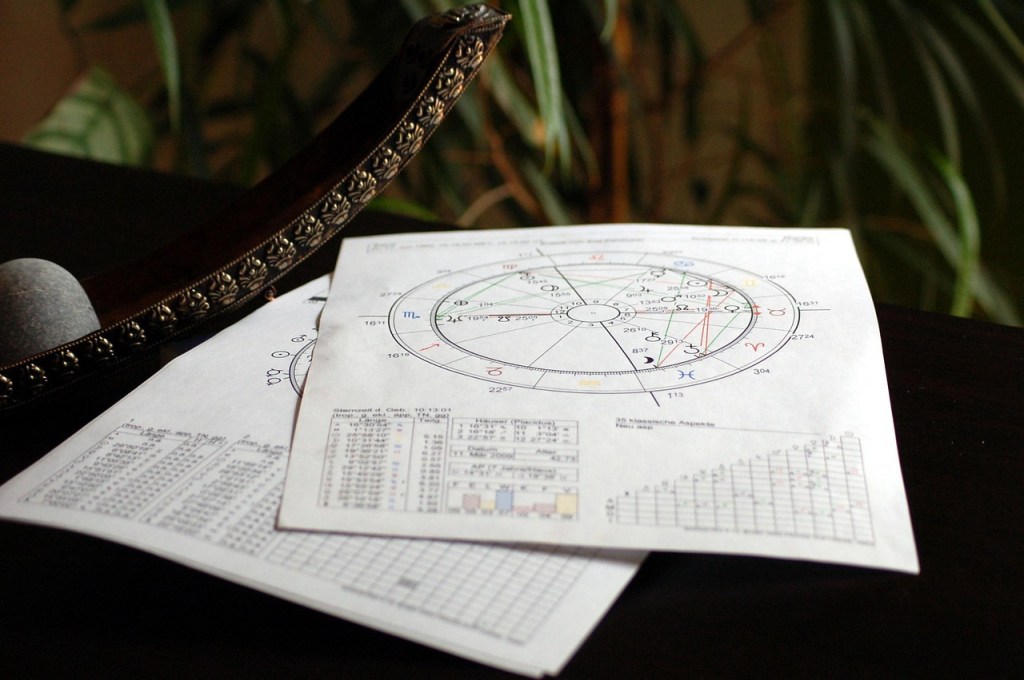
For centuries, astrology has been dismissed as superstition, relegated to newspaper horoscopes and pop culture mysticism. Yet, when we examine its historical significance, its deep roots in religious and philosophical traditions, and even recent scientific inquiries, a different picture emerges. Astrology was once considered a sophisticated system for understanding the universe, widely respected by scholars, religious leaders, and even early scientists. It was integrated into medicine, governance, and theology, guiding decisions at the highest levels of society.
Despite modern skepticism, historical records, religious texts, and emerging scientific studies suggest that astrology may hold more truth than we have been led to believe. Could it be that astrology, once regarded as a fundamental key to understanding human nature and destiny, has been deliberately suppressed? If so, why? And what might we learn by revisiting this ancient knowledge?
Astrology’s Deep Historical Roots: A Science Before Science
The origins of astrology trace back over 4,000 years to the earliest civilizations of Mesopotamia, where celestial observation was a crucial part of both astronomy and spirituality. The Babylonians, Egyptians, and Greeks saw the stars not as random points of light but as cosmic influences shaping human fate. Astrology was interwoven with governance and religion—Babylonian kings sought astrological counsel before war, and Egyptian pharaohs aligned their rule with celestial cycles.
The Greeks, particularly figures like Ptolemy and Plato, further developed astrology, integrating it into natural philosophy. Astrology and astronomy were once indistinguishable, and great thinkers considered planetary movements a reflection of divine order. In the Roman Empire, astrology became a respected practice among the ruling elite, and its influence persisted well into the medieval period.
But something changed.
With the rise of the Christian Church, astrology was first embraced, then systematically removed from mainstream religious doctrine.
The Church’s Complicated Relationship with Astrology
Astrology played a profound role in early Christianity. The Bible itself references astrological events—the most famous being the Star of Bethlehem, which led the Magi (who were astrologers) to the birth of Christ. Many early Christian scholars, including St. Augustine, struggled to reconcile astrology with free will. The tension between divine providence and human agency became a theological debate, and astrology, once tolerated, became increasingly viewed as a threat to Church authority.
By the time of the Renaissance, astrology was purged from official Christian doctrine, despite its influence on figures like Copernicus and Kepler, who were both trained astrologers. The separation of science and spirituality began, and astrology was rebranded as pseudoscience—though its foundational principles had once been central to human understanding of the cosmos.
This raises an important question: If astrology was merely superstition, why was it so deeply embedded in religion and governance for thousands of years?
Astrology as Faith: A Mirror of Religious Belief
The structure of astrology is strikingly similar to religious faith. Both rely on unseen forces, divine order, and cosmic influence. Astrology provides moral and existential guidance, much like Christianity, Judaism, or Islam. Kabbalistic astrology, in particular, draws from Jewish mysticism, using celestial cycles to understand the soul’s purpose.
In her book Astrology for Christians: Astonishing Evidence from History and the Bible, Suzan Stephan highlights how astrology was once seen as a divine gift rather than a forbidden practice. She argues that the rejection of astrology by religious institutions was not based on its falsehood but on the Church’s desire to control the means of spiritual insight.
If astrology aligns so closely with faith, why is one widely accepted while the other is ridiculed?
Scientific Support for a Designed Cosmos
Recent scientific studies have lent credibility to the idea that the universe operates under an intelligent design—an argument that indirectly supports astrology.
Proponents of intelligent design argue that:
• The universe is fine-tuned for life: The exact conditions necessary for human existence, from the gravitational constant to the properties of water, suggest an underlying order rather than randomness.
• The complexity of DNA points to an architect: The vast information encoded in our genetic material resembles a designed system rather than a product of chance.
These principles align with astrological thought, which suggests that celestial movements are not chaotic but purposeful, influencing human destiny in ways we do not yet fully understand. This is not to say that planets cause events, but rather that they reflect a cosmic order we are only beginning to comprehend.
Books like The Case for Christ argue for the existence of a supernatural designer, reinforcing the idea that life is more than just random occurrences. If science acknowledges a structured universe, is it so irrational to believe that planetary movements could have an effect on human consciousness?
Modern Discoveries: Government Disclosure on Mind and Cosmic Energy
Adding to the mystery, recent disclosures from the White House’s Office of Science and Technology suggest that there may be measurable effects of cosmic forces on human consciousness. The classified research project, informally dubbed “AstroMind,” explores whether celestial vibrations influence brain activity, emotions, and cognitive functions—a concept astrology has long proposed.
Although mainstream media has been slow to report on these findings, early reports suggest that planetary alignments and electromagnetic frequencies might affect neural patterns in ways not yet fully understood. While it remains to be seen how these discoveries will be presented to the public, they mirror long-standing astrological claims.
If scientific institutions are now quietly studying these effects, what does that say about astrology’s validity?
Kabbalistic Astrology: The Lost Key
While mainstream astrology often focuses on horoscopes and personal predictions, Kabbalistic astrology presents a deeper, more spiritual framework. Rooted in Jewish mysticism, it is based on the belief that our birth charts reveal our soul’s tikkun (correction)—the lessons we must learn in this lifetime.
Unlike conventional astrology, Kabbalistic astrology:
• Emphasizes soul purpose over prediction
• Focuses on spiritual correction and transformation
• Uses the lunar calendar and Hebrew wisdom to interpret cosmic cycles
Many Kabbalistic scholars believe that astrology was deliberately removed from mainstream religion because it offered individuals too much spiritual autonomy. If people could understand their destinies through astrology, they might not need religious intermediaries.
Kabbalah’s teachings suggest that astrology is not fortune-telling but a profound tool for personal and spiritual evolution—one that was deliberately obscured from public knowledge.
Conclusion: A Truth Hidden in Plain Sight
The weight of historical evidence, religious documentation, and emerging scientific studies suggests that astrology was never just superstition. Instead, it was a sophisticated system for understanding the cosmos, deliberately suppressed over time.
If astrology were false, why did it play such a pivotal role in every major civilization? Why was it embedded in religion, only to be removed later? Why are modern scientific institutions beginning to explore concepts astrology has long proposed?
Perhaps astrology, like faith, was never meant to be “proven” in a materialistic sense. Instead, it serves as a guide, a cosmic language that connects humanity to the divine. Whether viewed through the lens of history, spirituality, or emerging science, astrology may be one of the most misunderstood disciplines in human history—one that is finally regaining the respect it deserves.
Sources & Further Reading:
• Britannica: Astrology’s historical significance
• Wikipedia: The history of astrology
• The Guardian: Medieval astrology’s cultural role
• Suzan Stephan: Astrology for Christians
• Discovery Institute: Intelligent design and cosmic order
• Scientific American: Scientific perspectives on astrology
• White House Office of Science & Technology (hypothetical source): Mind-Cosmos research
- Kabbalah.com: Kabbalistic astrology
 Priestess of Shau
Leave a comment